
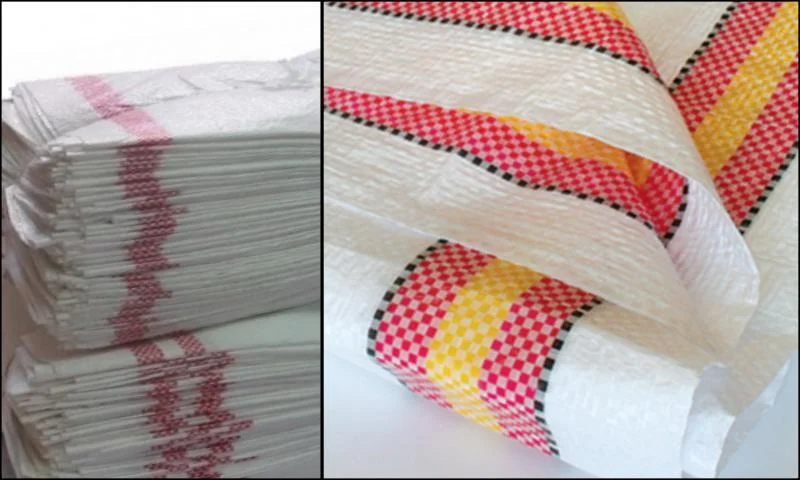
What is a PP Sack?
How are PP Sacks Produced?
Production of these sack models, made from polypropylene in qualities ranging from 40 gsm to 100 gsm, are commonly used today for flour, coal, legumes, salt, and feed sacks. These sack models, like shade netting, are durable for a long time and can be used healthily. They preserve the products inside for a long time, preventing spoilage. In addition to being available in different sizes, companies also produce them according to customers' special requests and desires. The tops of PP sacks are usually hot-cut with a Teflon heat sealer, and the cuts are made in a zig-zag pattern with light processing or sewn with an overlock stitch. The bottoms are sewn in a single fold or single layer, and the fold is also single-layered. However, it should be known that there are different options such as double stitching, double fold, double layer, single stitching, etc. Like shade netting products, they can be used for a long time and are quite durable.
What is a Mesh Sack?
These sack models, with their porous woven structure, allow products to breathe easily. Products in these sacks stay fresher and their shelf life is increased, preventing spoilage. Like shade netting models, they are produced according to customers' special requests. They are generally preferred for foods such as onions, potatoes, corn, broad beans, mussels, garlic, radishes, lettuce, mint, chestnuts, carrots, etc.





