

How to Use Body Language When Giving a Presentation?
When we say presentation, we all think of introducing a product, presenting a diligent work to the appreciation of people, or definitions such as conference, briefing, symposium. Yes; all of these can be gathered under the heading of making a presentation. However, we should know that in its simplest definition, "Making a Presentation" is a way of expressing ourselves through body and speech language.
Effects of Body Language on Presentation

One of the moments when you can measure how effectively you use body language is the reactions you receive while giving a presentation. If you are really effective in this regard, you may notice that the people you address listen to you more attentively during the presentation. Similarly, questions that may be directed to you from the other party and the contributions of the audience to the presentation are another indicator of this. The degree to which you can use body language well is directly proportional to the reactions you receive from the other party. Because the better you are in this regard, the more you can engage the other party and make yourself heard.
What is Body Language?
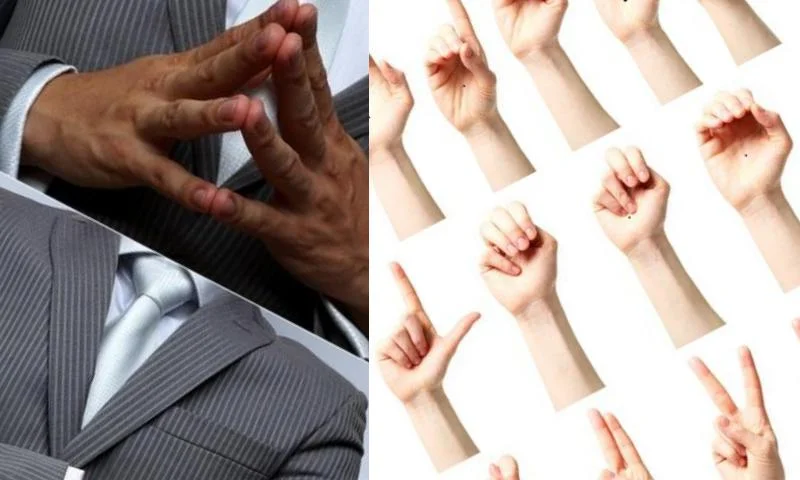
Using body language well and effectively has many benefits for us in terms of personal development. The way our body is positioned, how we use our hands and arms, our gestures and facial expressions, our gaze, our tone of voice, our posture towards the person or people we address... With all these and similar body language movements, we can express ourselves and leave a positive or negative impression on the other party. Now, let's examine together how we should use our body language for an effective presentation and the behaviors we might unintentionally exhibit during the presentation that could leave a negative impression on the other party:
How Should We Use Body Language for an Effective Presentation?

- Undoubtedly, one of the most common problems during a presentation is not knowing where to put our hands. Our palms should always be open during the presentation. Having a pen or any small object in our hand while speaking will make our job easier. Besides, we should definitely not cross our arms in front of or behind us.
- A second issue is related to our posture. Our posture should never be hunched, bent, or with our shoulders slumped. We should always strive to maintain an upright posture while speaking. Also, our body orientation should always be towards the person or people we are addressing.
- Another topic we need to address is gestures and facial expressions. Our facial expressions, our gaze. We should not avoid making eye contact when giving a presentation. Also, our gaze towards the person or people we are addressing should never be harsh. Let's not forget that we can convey and communicate an emotion to the person opposite us just by using our facial expressions or gaze.
- Tone of voice is an equally important factor. Our speech should always be in a soft tone of voice, but we should also remember to use our tone of voice appropriately in areas that need emphasis and should be stated with importance.
We can add to the topics mentioned above, but we have tried to cover the most important issues affecting the speech here. Let's never forget that knowledge and self-confidence are also very, very important. Because if you have sufficient and necessary knowledge about the subject you will convey to the other party, this will provide you with a high degree of self-confidence. If you have the necessary self-confidence, this will positively affect your body language and reflect on the people you are addressing, making your way of speaking of high quality. Along with what you say, it is also very important what the other people take from what you say or understand the subject simply and do not get bored while listening. Furthermore, the feedback you receive from the people who listened to you after completing the presentation should also be positive. This will reveal the quality of the work you have done.





