
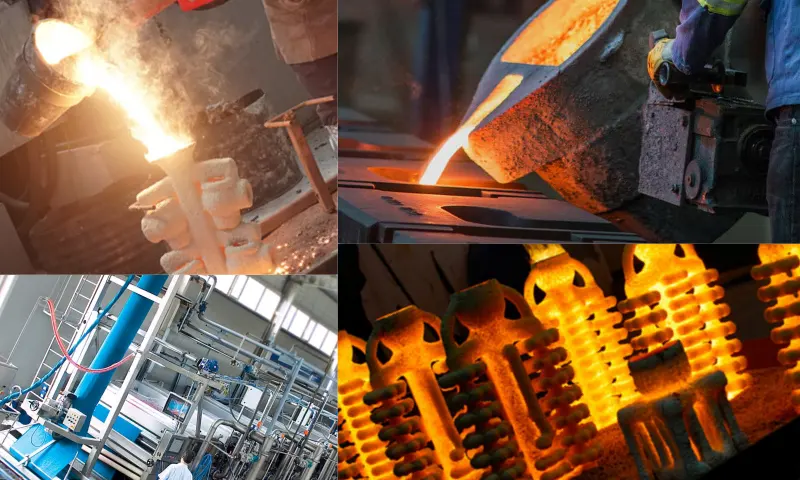
What is Precision Casting?
Precision casting is a casting process that consists of a series of operations using a liquid refractory slurry. A wax or plastic model is used for the liquid refractory. Models are created by placing wax or plastic in a mold and giving it the desired shape. The model created from these materials is then coated with refractory. The casting produced as a result of detailed work is very clean and reaches a level where it does not require further processing. You can examine related online companies on internet pages to get information on this subject and ask your questions.
What are the Advantages of Precision Casting? 
Complex or dimensionally identical parts can be cast. Additionally, wax can be recovered for reuse. High surface quality is an important detail. In addition to all these advantages, this method is a shaping method, and the process is completed without requiring any additional machining. In terms of precision casting, in addition to the advantages mentioned, the fact that this method has undergone a detailed and meticulous processing stage is a very important step. In this regard, the use of a precisely made casting provides an additional advantage by saving wax, which is very important.
Where is Precision Casting Applied?
Looking at the application areas of precision casting, this method is used in the production of parts made of special alloys in the chemical industry, in the production stage of machine parts used in the textile industry, and in the manufacturing stage of valves and fittings that help process petroleum products. Precision casting is needed during the production of many items in the industrial field. It is used in countless areas such as engine parts, weapon parts, pump valve parts, automotive parts, medical sector parts, air conditioning product parts, textile machine parts, ship auxiliary industry parts, and combi-radiator parts.





