

NASA's X-59 Aircraft Reaches Mach 1.4 with New Pilot
NASA's X-59, developed for low-noise supersonic flight, completed its first flight with its new pilot. According to NASA's statement on October 22, 2026, Mike Lippert took off from the Armstrong Flight Research Center in California on October 21. During the approximately one-hour flight, the experimental aircraft reached Mach 1.4 speed and an altitude of 55,000 feet.

Photo: NASA/Carla Escamilla.
From Simulator to Real Flight
Lippert prepared for months in the simulator and on the ground before the flight. The test was carried out after planned maintenance and system review. The aircraft's control responses and systems were evaluated through maneuvers performed during the flight.
Mach 1.53 Also Seen in Tests
The X-59 program increased its flight tempo in September. The aircraft, making two flights on September 22, 24, and 25, broke its own record by reaching six test flights in one week. NASA's report on October 2 stated that the total number of test flights reached 38 during this period.
Mach 1.53 speed was also reached in the same test week. This value was the highest speed announced for the X-59 in that report. The aircraft's normal cruise target is Mach 1.4. Testing different speeds, altitudes, and maneuvers allows for the evaluation of the aircraft's flight limits.
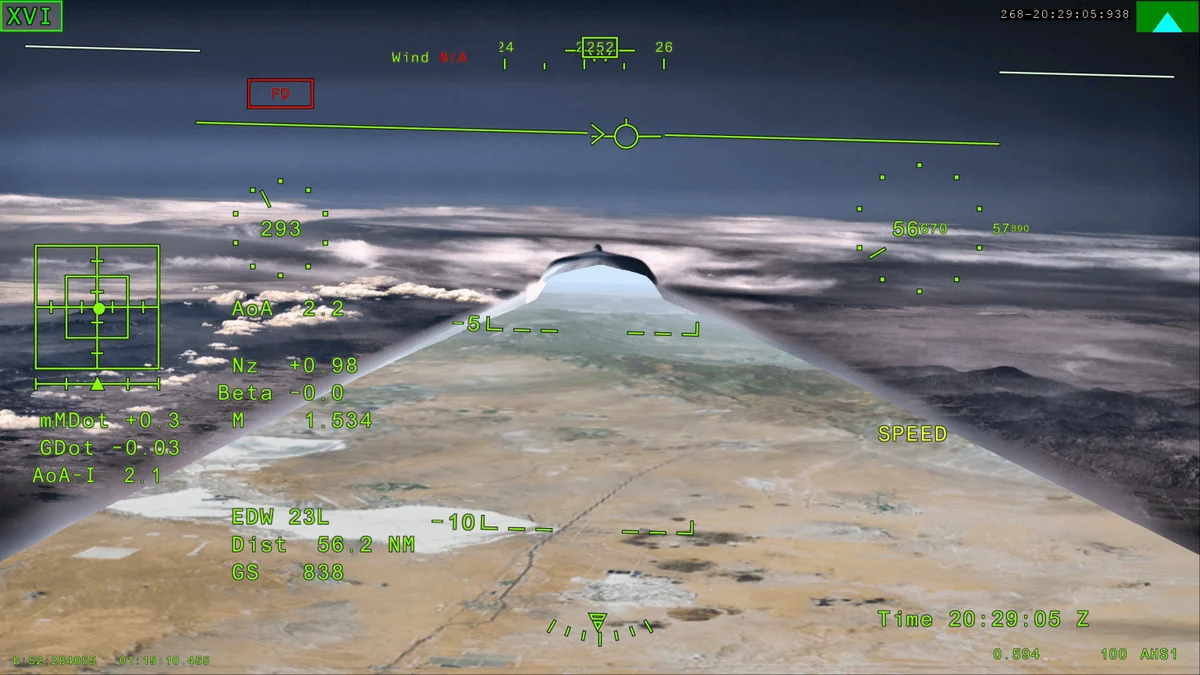
Image: NASA. Screen recording of the external vision system during a test flight in September 2026.
The Goal is to Mitigate the Sonic Boom
The X-59 is the research aircraft for NASA's Quesst mission. The goal is to demonstrate technology that can transform the loud sonic boom heard on the ground during supersonic flight into a quieter sound.
In the next stages of the mission, flights over populated areas and public opinion surveys are planned. The data obtained will be shared with national and international regulators who evaluate acceptable noise thresholds for commercial supersonic flights over land.
Sources
NASA — Mike Lippert's First X-59 Flight, October 22, 2026
NASA — Six Flights in a Week and Mach 1.53 Test, October 2, 2026
NASA — Quesst Mission and Research Objective